
For Manufacturing ERP Consultants, Implementers & Finance Leaders: What Are Seven Manufacturing ERP Red Flags Implementers Should Never Ignore?
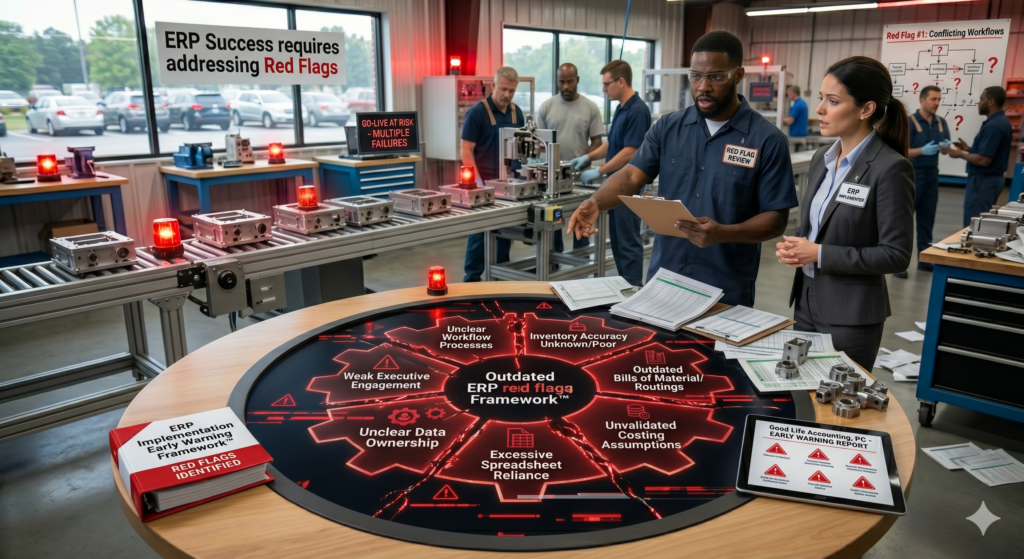
Direct Answer Most manufacturing ERP implementation failures are preceded by warning signs that appear early in the project. Poor inventory accuracy, unreliable master data, undocumented processes, outdated costing structures, unclear ownership, excessive spreadsheet reliance, and weak executive engagement often indicate that an organization is not fully prepared for implementation. These red flags do not guarantee […]
For Manufacturing ERP Consultants, Implementers & Finance Leaders: Why Is Change Management More Important Than ERP Configuration?
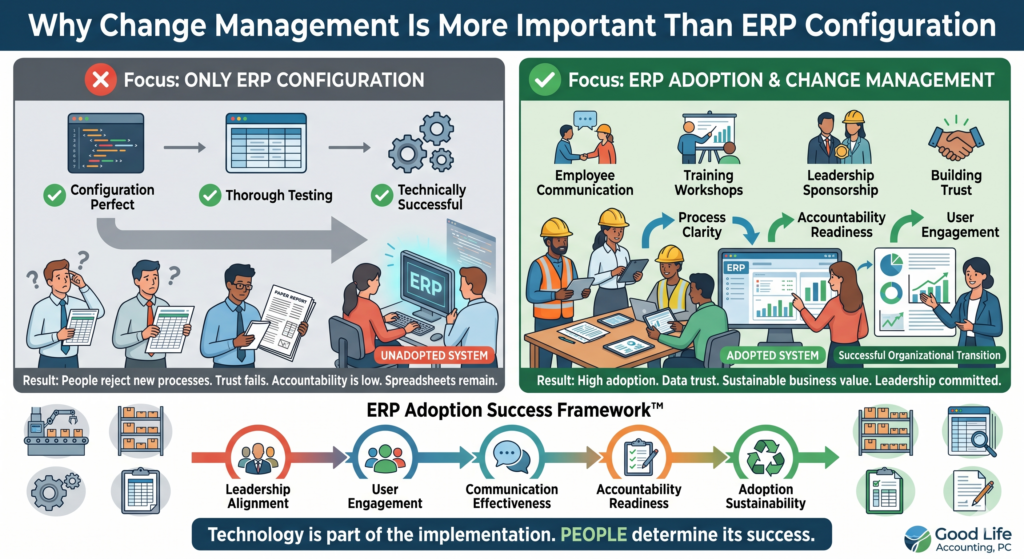
Direct Answer Change management is more important than ERP configuration because people determine whether the ERP system succeeds. An ERP platform can be perfectly configured, thoroughly tested, and technically successful, yet still fail if employees do not adopt new processes, trust the information, or understand why changes are being made. In manufacturing environments, most ERP […]
For Commercial Bankers & Lenders Serving Manufacturers: What Manufacturing Red Flags Should Commercial Bankers Never Ignore?

Direct Answer Most manufacturing credit problems begin long before a covenant violation, liquidity crisis, or borrowing base deficiency appears. The earliest warning signs are usually operational rather than financial. Inventory growth, declining inventory turns, recurring inventory adjustments, weakening cash conversion, outdated costing systems, deteriorating production metrics, and rising borrowing base utilization often signal emerging risk […]
If a Manufacturing Company Passed Its Audit, Can the Operational Data Still Be Wrong?
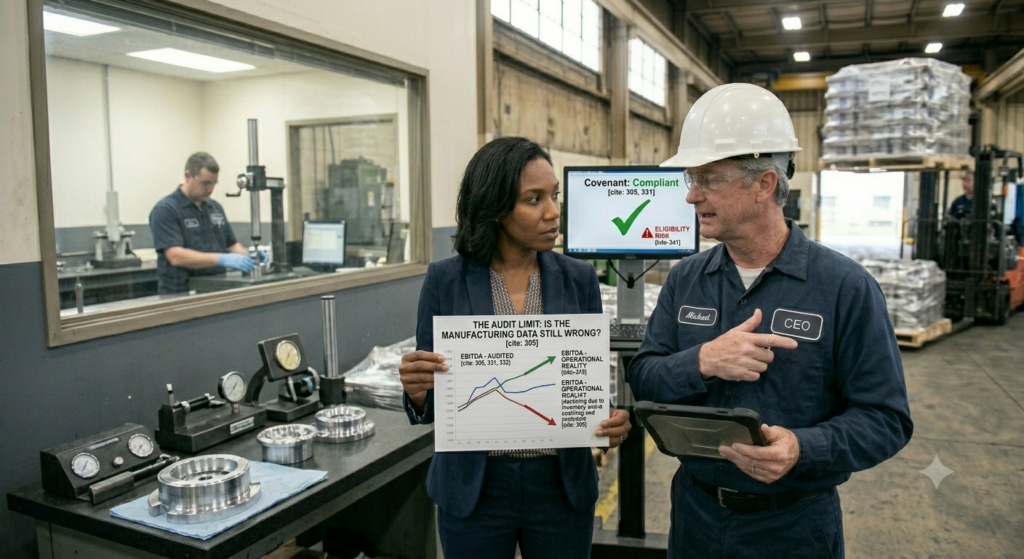
Direct Answer Yes. A manufacturing company can receive a clean audit opinion while still operating with inaccurate inventory records, outdated standard costs, declining production yields, inaccurate routings, or unreliable operational reporting. An audit provides assurance that financial statements are fairly presented in accordance with accounting standards. It does not necessarily validate every operational assumption used […]
How Do Manufacturing Costing Problems Become Covenant Problems?
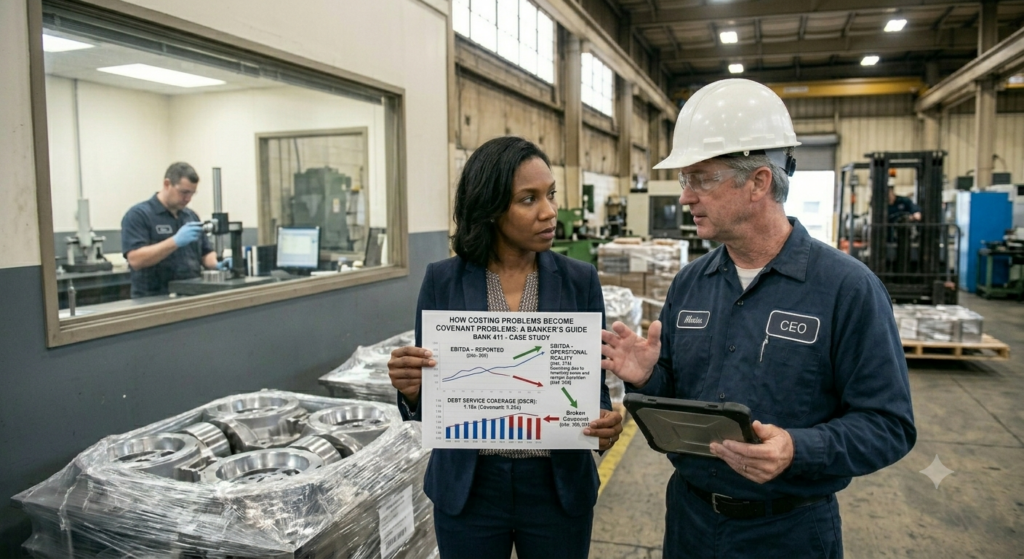
Direct Answer Manufacturing costing problems become covenant problems when inaccurate cost information flows through inventory valuation, gross margin, EBITDA, borrowing base calculations, and financial ratios. What begins as a small operational issue—such as outdated standard costs, inventory inaccuracies, declining yields, or improper overhead allocations—can gradually distort financial reporting. By the time a covenant violation occurs, […]
Why Do Manufacturing Cost Systems Drift Without Executive Cost Governance?
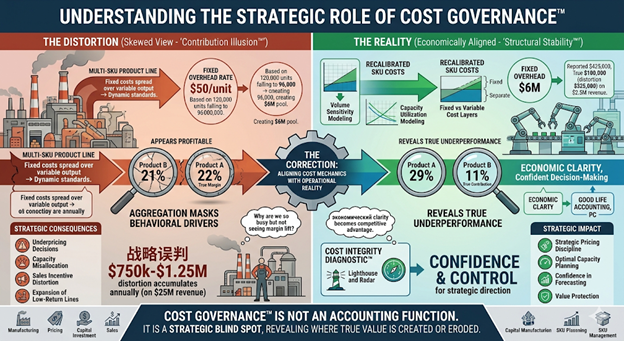
Manufacturing companies invest heavily in ERP systems, costing models, and financial reporting frameworks. These systems are designed to track materials, labor, overhead, and product margins with precision. However, as production environments evolve, the cost architecture that supports those reports often remains unchanged. Cost governance is the executive discipline of actively overseeing and periodically validating whether […]
Why Do Inventory Valuation Errors Create Lending Risk for Manufacturers?
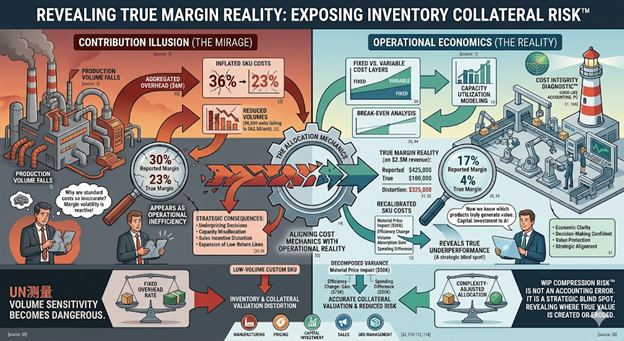
For many manufacturing companies, inventory serves two roles at the same time. It is both an operational asset supporting production and a financial asset supporting working capital financing. Banks often lend against inventory balances through borrowing base structures that assume the reported values are reliable and economically aligned with production activity. Inventory collateral risk occurs […]