
Why Does Absorption Costing Create Margin Volatility Instead of Stability?
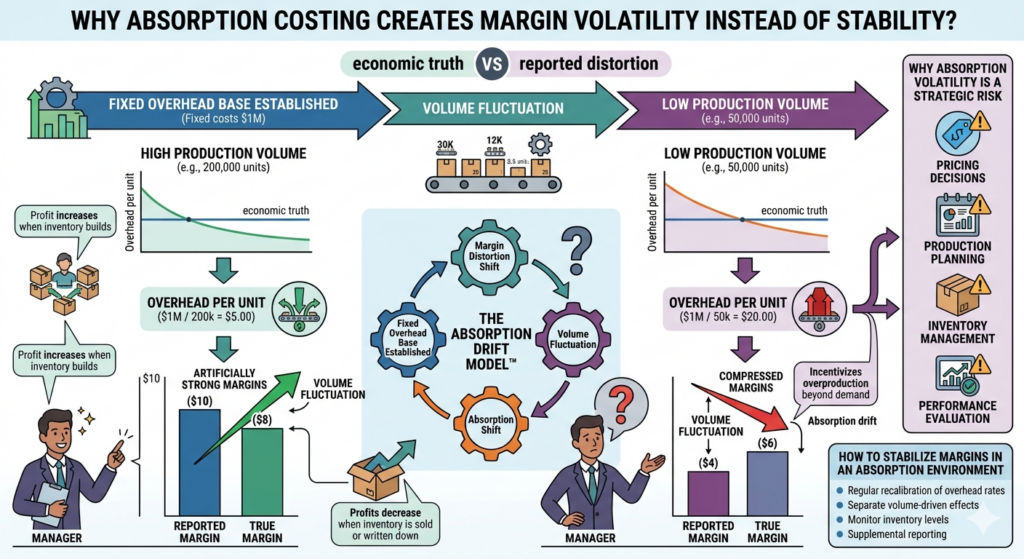
Absorption costing creates margin volatility because it allocates fixed overhead based on production volume rather than actual economic activity. When production levels fluctuate, the amount of overhead applied per unit changes—causing margins to rise or fall artificially, even when the underlying business has not changed. Absorption costing is designed to stabilize financial reporting by spreading […]
How Do Uncaptured Production Variations Create Hidden Cost Gaps?
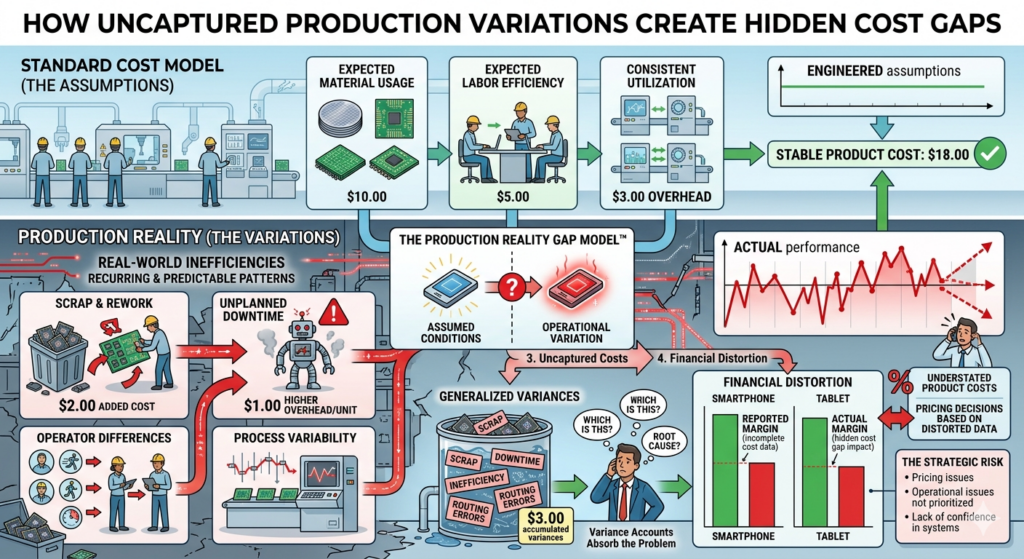
Uncaptured production variations create hidden cost gaps because real-world inefficiencies—such as scrap, rework, downtime, and process variability—are not reflected in standard costing systems. These untracked differences accumulate outside the cost model, leading to understated product costs, margin distortion, and misleading financial signals. Most costing systems are built on engineered assumptions. But production rarely behaves exactly […]
Why Are Bill of Materials (BOM) Errors More Dangerous Than They Appear?
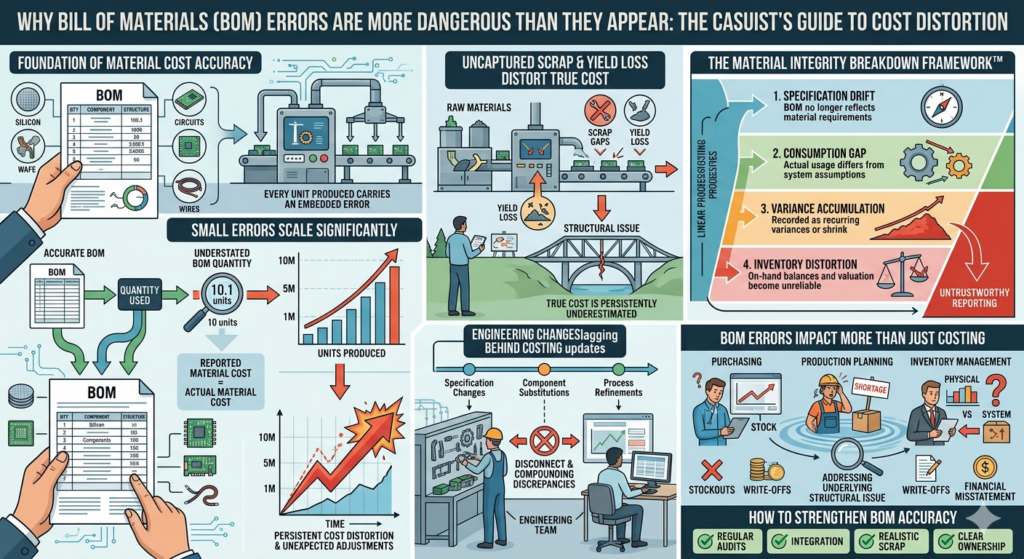
Bill of Materials (BOM) errors are dangerous because they systematically misstate material usage at the unit level, and when multiplied across production volume, they create persistent cost distortion in margins, inventory valuation, and purchasing decisions. Even small inaccuracies compound into significant financial misstatement over time. Most manufacturers assume BOM accuracy is “close enough.” In reality, […]
How Do Inaccurate Routings Distort Labor and Overhead Allocation?
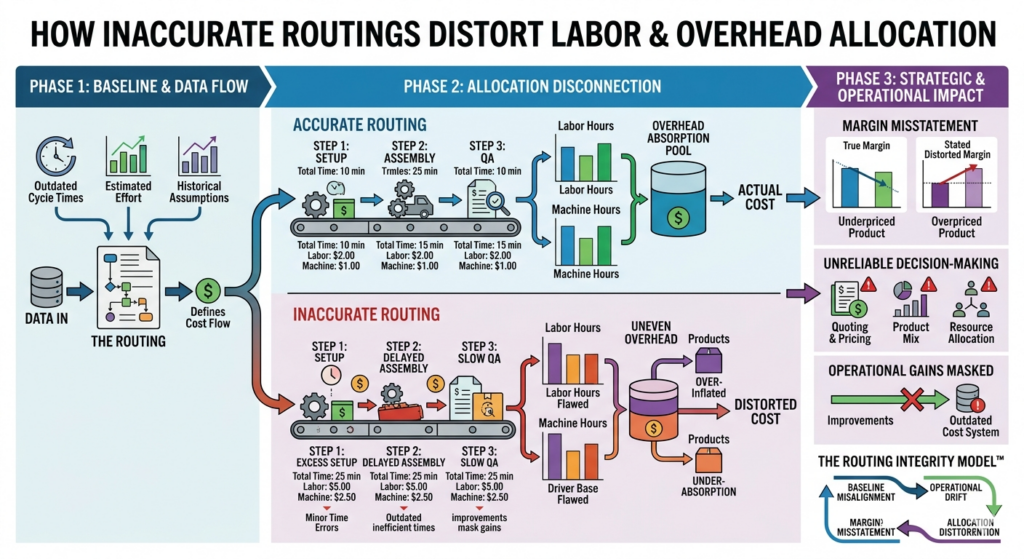
Inaccurate routings distort labor costs and overhead allocation because they misstate the time, effort, and resources required to produce a product. Since labor and machine hours often serve as the foundation for overhead absorption, even small routing errors can create system-wide cost misallocation and margin distortion. Routings are one of the most overlooked components of […]
Why Do Standard Costs Drift Away from Reality Over Time?
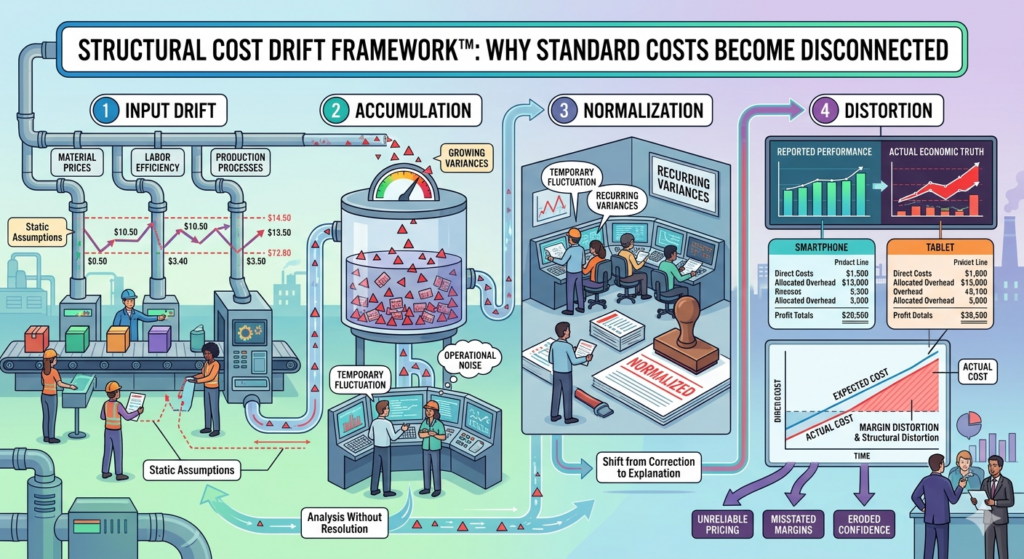
Standard costs drift away from reality because they are rarely recalibrated to reflect changes in materials, labor efficiency, and production processes. Over time, this creates a widening gap between expected and actual costs—causing margin distortion, unreliable variance reporting, and poor decision-making. Manufacturers rely on standard costs to stabilize reporting and simplify operations. But when those […]
Why Can EBITDA Improve While Cash Flow Gets Worse in Manufacturing?

Direct Answer Yes, EBITDA can improve while cash flow deteriorates in manufacturing companies. This typically occurs when inventory, accounts receivable, or working capital requirements grow faster than cash generation. In these situations, reported profitability may improve while liquidity weakens. For commercial bankers, this distinction is critical because loans are repaid with cash flow, not EBITDA. […]