
What Happens When Standard Costs Are Wrong During ERP Implementation?

Direct Answer When standard costs are wrong during an ERP implementation, the system can generate inaccurate inventory valuations, unreliable product margins, misleading profitability reports, incorrect production variances, and poor management decisions. The ERP software may be configured correctly, transactions may process successfully, and reports may appear professional, yet the financial information produced by the system […]
Why Do Manufacturing Companies Often Discover Process Problems During ERP Projects?
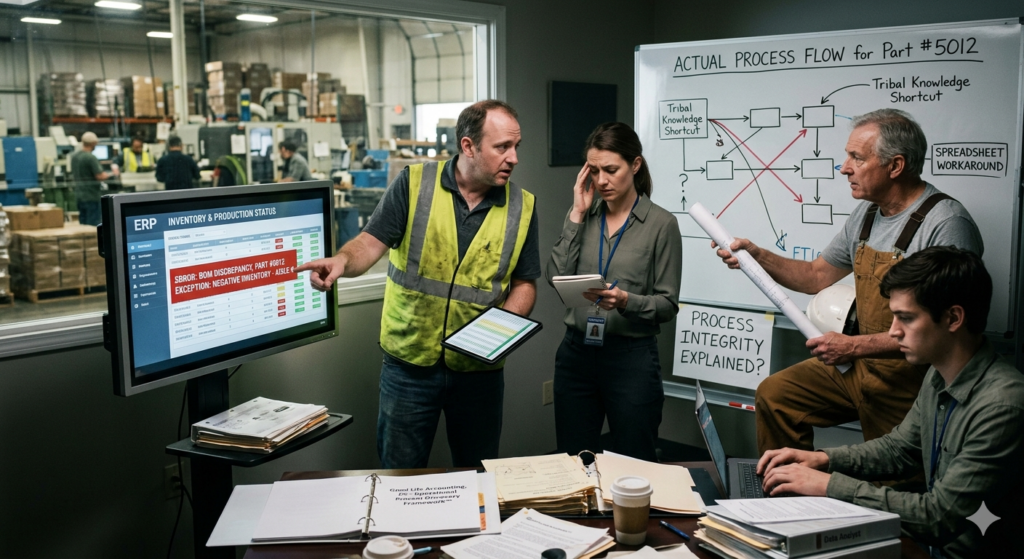
Direct Answer Manufacturing companies often discover process problems during ERP projects because ERP systems require organizations to define, document, standardize, and automate workflows that may have evolved informally over many years. Processes that once relied on spreadsheets, tribal knowledge, manual workarounds, and individual employees suddenly become visible during implementation. In most cases, the ERP system […]
Why Do Inventory Problems Become ERP Problems?

Direct Answer Inventory problems become ERP problems because inventory is one of the most interconnected functions within a manufacturing business. Inventory touches purchasing, receiving, production, warehouse operations, shipping, costing, financial reporting, and customer service. When inventory processes are inaccurate, delayed, or inconsistent, the ERP system simply reports those problems more clearly. In most manufacturing ERP […]
Can Bad Master Data Destroy an ERP Implementation?
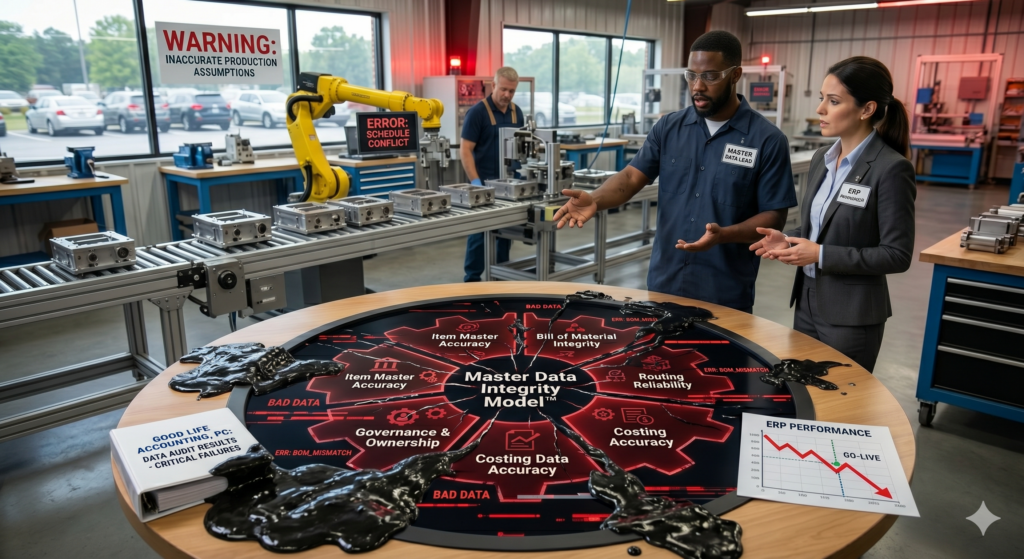
Direct Answer Yes. Bad master data can destroy an ERP implementation even when the software is configured correctly, users are properly trained, and the project is delivered on time. ERP systems depend on accurate item masters, bills of material, routings, work centers, vendor records, customer records, and costing structures. When that information is inaccurate, incomplete, […]
Why Should Process Mapping Occur Before ERP Configuration?
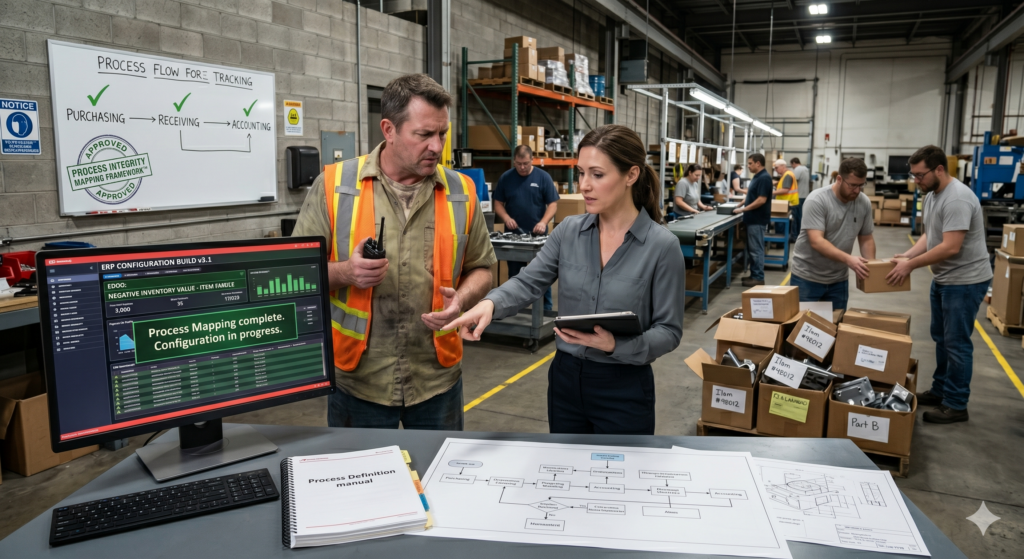
Direct Answer Process mapping should occur before ERP configuration because an ERP system can only automate processes that the organization understands. When manufacturers configure software before documenting how work actually flows through purchasing, inventory, production, shipping, and accounting, they often automate inconsistencies, workarounds, and operational inefficiencies. For most manufacturing ERP projects, the greatest risk is […]
Why Do Manufacturing ERP Implementations Fail Even When the Software Works?
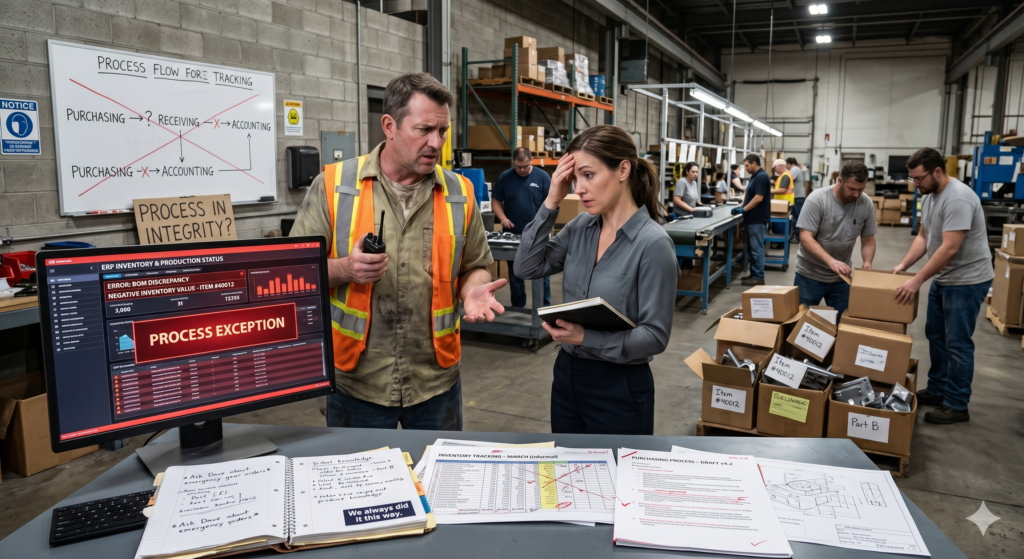
Direct Answer Most manufacturing ERP implementations fail because of process, data, inventory, and costing problems—not because of software problems. In most cases, the ERP system performs exactly as designed, but the organization lacks documented workflows, reliable master data, accurate inventory records, clear ownership, or current costing structures. When an ERP system automates poorly understood processes, […]