
For Manufacturing ERP Consultants, Implementers & Finance Leaders: Why Do Bills of Material and Routings Matter to Financial Reporting?

Zero-Click Answer Bills of material and routings matter to financial reporting because they help determine how an ERP calculates product costs, values inventory, records production consumption, and ultimately reports gross margin. A BOM tells the system what materials should be consumed to manufacture a product, while a routing helps define the operations, labor, machine time, […]
For Manufacturing Owners, CEOs, CFOs & Controllers: Why Does Work-in-Process (WIP) Become a Black Box?
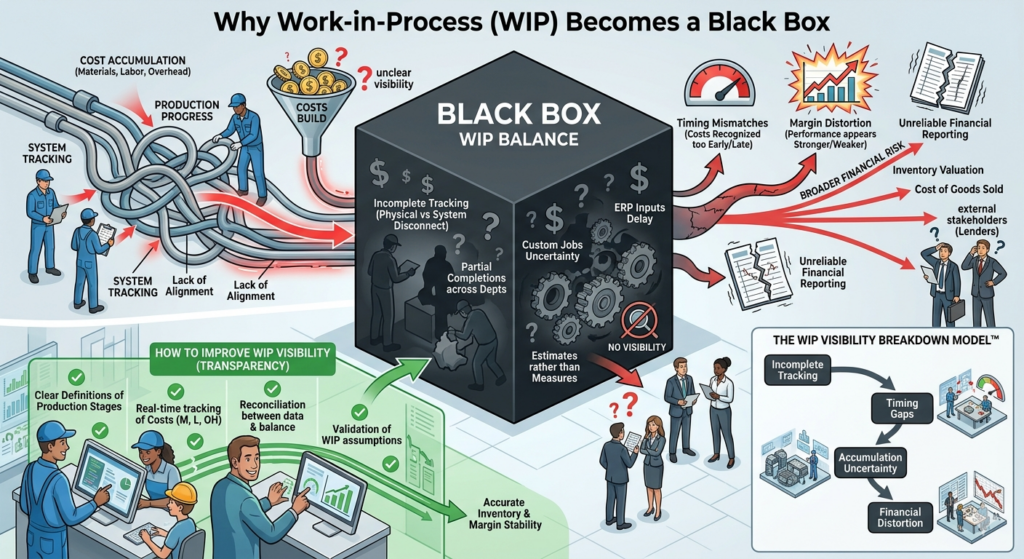
Work-in-Process (WIP) becomes a black box because cost accumulation, production progress, and system tracking are not properly aligned. As a result, costs build inside WIP without clear visibility into what has been completed, what remains, and how value is being assigned—leading to timing mismatches, margin distortion, and unreliable financial reporting. WIP is intended to bridge […]
For Manufacturing ERP Consultants, Implementers & Finance Leaders: What Should a Manufacturing ERP Readiness Assessment Include?
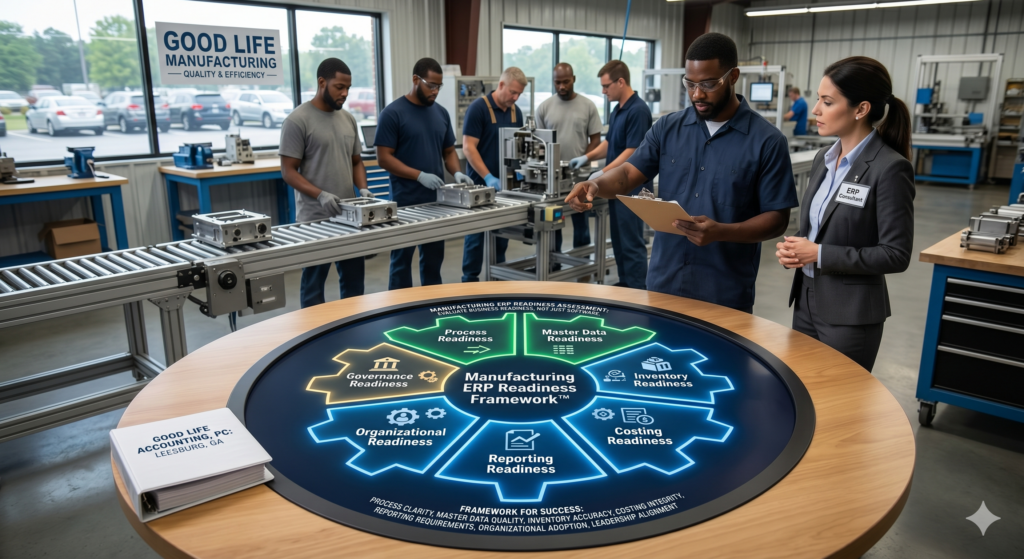
Direct Answer A manufacturing ERP readiness assessment should evaluate far more than software requirements. Successful ERP implementations depend on process clarity, master data quality, inventory accuracy, costing integrity, reporting requirements, organizational readiness, governance, and leadership alignment. Organizations that assess these areas before implementation often identify risks that would otherwise delay projects, increase costs, reduce user […]
Can Bad Master Data Destroy an ERP Implementation?
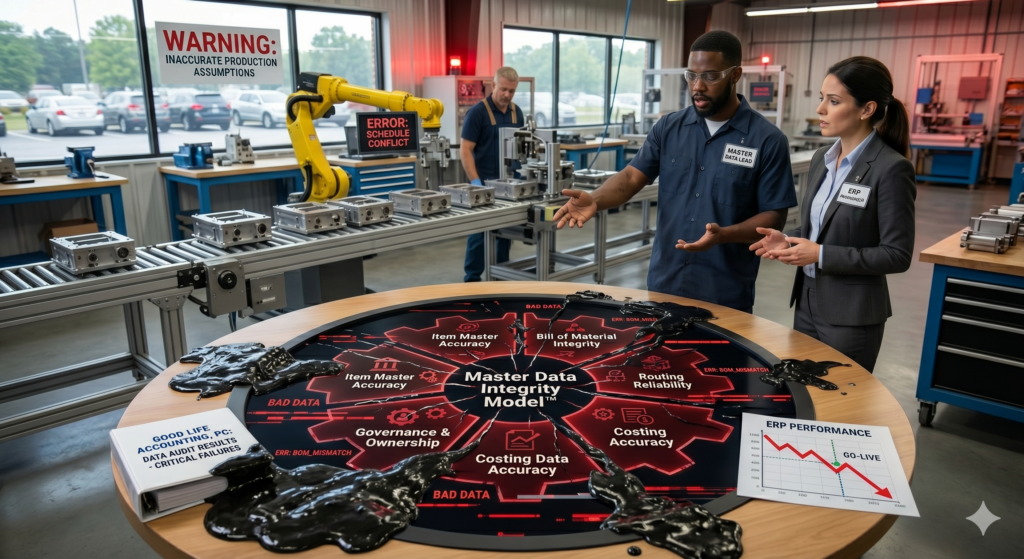
Direct Answer Yes. Bad master data can destroy an ERP implementation even when the software is configured correctly, users are properly trained, and the project is delivered on time. ERP systems depend on accurate item masters, bills of material, routings, work centers, vendor records, customer records, and costing structures. When that information is inaccurate, incomplete, […]