
Why Should Process Mapping Occur Before ERP Configuration?

Direct Answer Process mapping should occur before ERP configuration because an ERP system can only automate processes that the organization understands. When manufacturers configure software before documenting how work actually flows through purchasing, inventory, production, shipping, and accounting, they often automate inconsistencies, workarounds, and operational inefficiencies. For most manufacturing ERP projects, the greatest risk is […]
Why Do Costing Systems Fail After ERP Implementation?
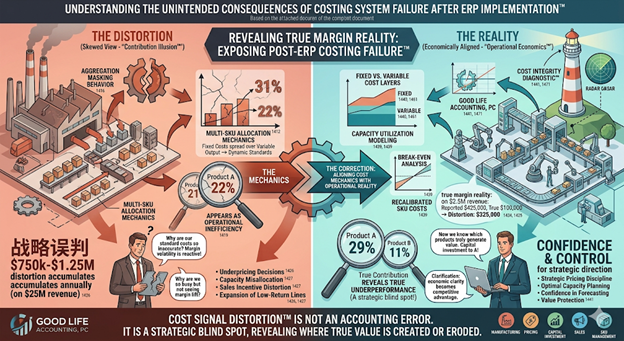
ERP systems are designed to bring structure and control to manufacturing operations. But many companies discover—often too late—that their costing problems didn’t disappear after implementation. In some cases, they got worse. Costing systems fail after ERP implementation because ERP systems configure structure—not cost accuracy. If cost drivers, standard costs, and operational assumptions are not validated […]
Why Do Manufacturing ERP Implementations Fail Even When the Software Works?
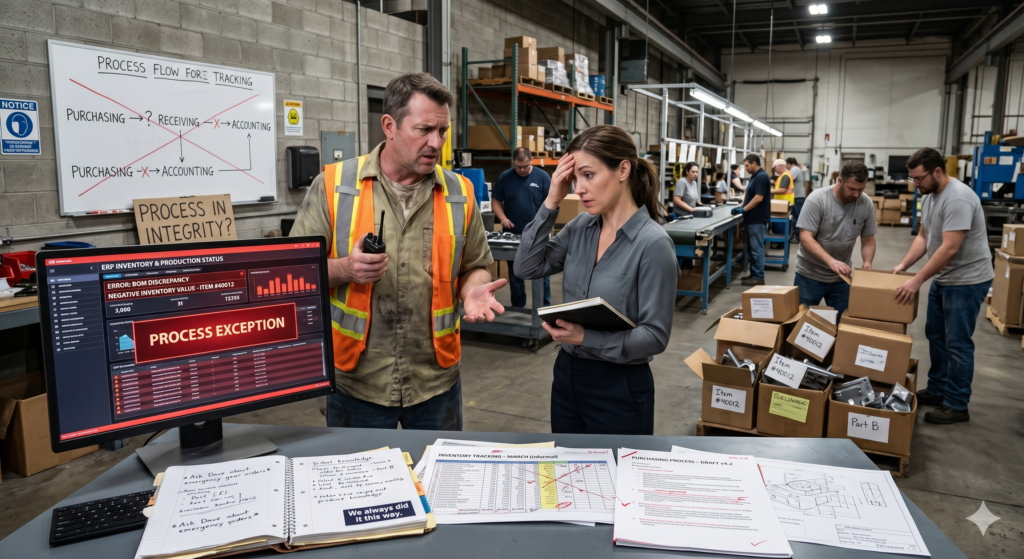
Direct Answer Most manufacturing ERP implementations fail because of process, data, inventory, and costing problems—not because of software problems. In most cases, the ERP system performs exactly as designed, but the organization lacks documented workflows, reliable master data, accurate inventory records, clear ownership, or current costing structures. When an ERP system automates poorly understood processes, […]
What Are the Early Warning Signs Your Costing System Is Failing?
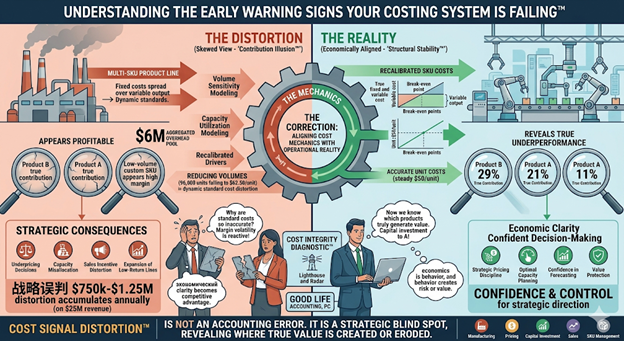
Most costing systems don’t fail all at once—they drift. The challenge is that by the time the problem is obvious, the financial impact is already embedded in your margins, inventory, and pricing decisions. The early warning signs of a failing costing system include stable but misleading margins, recurring unexplained variances, frequent inventory adjustments, and growing […]