
For Manufacturing Owners, CEOs, CFOs & Controllers: What Happens When Overhead Pools Become Bloated or Misaligned?
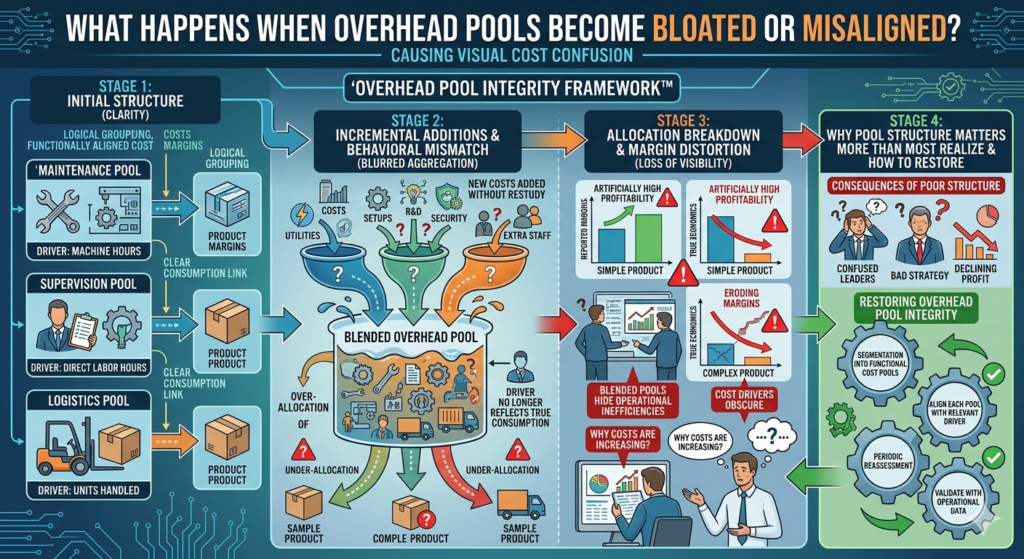
When overhead pools become bloated or misaligned, they combine unrelated costs into broad categories that obscure how resources are actually consumed. This reduces cost visibility, weakens allocation accuracy, and leads to distorted product margins and poor operational decision-making. Overhead pooling is meant to organize indirect costs into logical groupings. But over time, these pools often […]
For Manufacturing Owners, CEOs, CFOs & Controllers: How Do Poor Overhead Drivers Misallocate Costs Across Products?
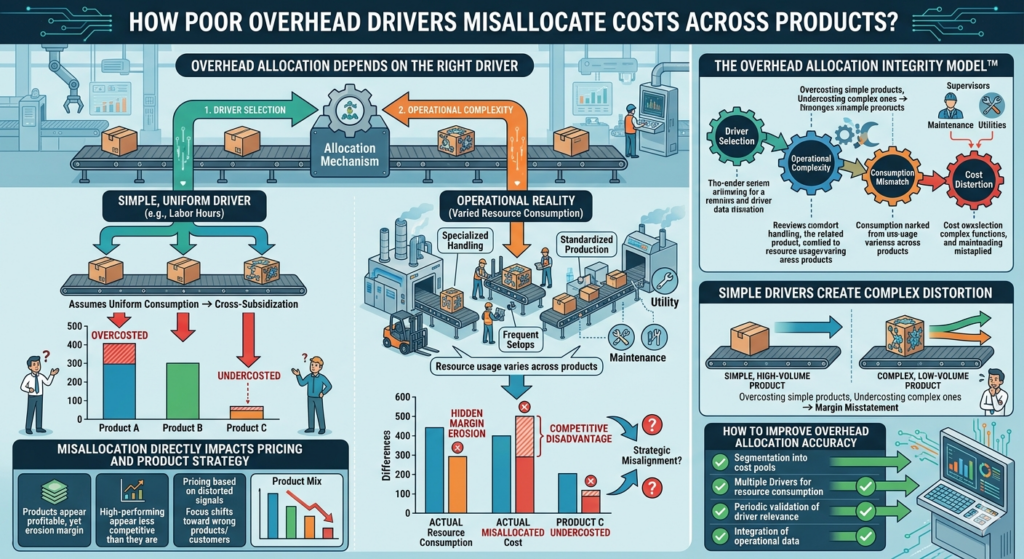
Poor overhead drivers misallocate costs because they assign indirect expenses using simplistic or outdated assumptions that do not reflect actual resource consumption. This causes some products to absorb too much cost while others absorb too little—resulting in distorted margins, incorrect pricing, and flawed product strategy decisions. Most manufacturers rely on overhead allocation to distribute indirect […]
What Do ERP Consultants Wish Manufacturers Knew Before Implementation?

Direct Answer Most ERP consultants wish manufacturers understood that ERP success depends far more on business readiness than software functionality. The most successful implementations occur when manufacturers have documented processes, reliable master data, accurate inventory records, validated costing structures, clear ownership, and strong executive support before implementation begins. Conversely, many ERP challenges arise when organizations […]
If a Manufacturing Company Passed Its Audit, Can the Operational Data Still Be Wrong?
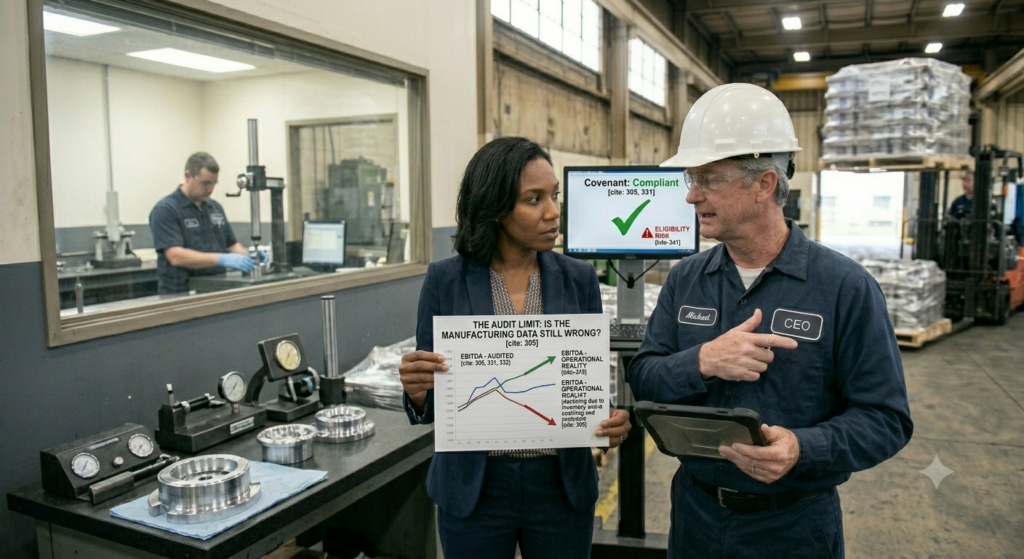
Direct Answer Yes. A manufacturing company can receive a clean audit opinion while still operating with inaccurate inventory records, outdated standard costs, declining production yields, inaccurate routings, or unreliable operational reporting. An audit provides assurance that financial statements are fairly presented in accordance with accounting standards. It does not necessarily validate every operational assumption used […]
Why Should Manufacturing KPIs Be Defined Before ERP Reporting Is Built?

Direct Answer Manufacturing KPIs should be defined before ERP reporting is built because reports only create value when they support decision-making. Many ERP implementations focus on dashboards, analytics, and reporting functionality before leadership has clearly defined which metrics matter, who owns them, how they should be calculated, and what actions should be taken when performance […]
What Manufacturing Metrics Should Every Commercial Banker Understand?

Direct Answer Commercial bankers who lend to manufacturers should understand more than financial ratios. Inventory turns, yield, scrap rates, work-in-process inventory, schedule attainment, capacity utilization, labor efficiency, production variances, and equipment effectiveness often reveal emerging credit risks months before those risks appear in financial statements. While financial statements explain what happened, manufacturing metrics often indicate […]
What Working Capital Warning Signs Are Hidden in Manufacturing Production Data?

Direct Answer Many manufacturing working capital problems become visible in production data months before they appear in financial statements. Declining inventory turns, increasing work-in-process inventory, longer production cycle times, worsening yields, and declining schedule attainment often signal future liquidity pressure before lenders see changes in EBITDA, borrowing base utilization, or covenant compliance. For commercial bankers, […]
When Should You Question Your Costing System (Even If Nothing Seems Broken)?
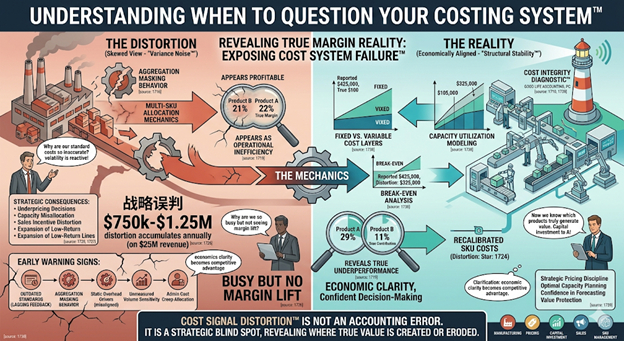
Most manufacturers wait until something breaks before questioning their costing system. But by then, the financial impact is already embedded in margins, inventory, and pricing decisions. You should question your costing system when confidence in your numbers starts to erode—even if reports still look stable. Signals like uncertain margins, risky pricing decisions, recurring adjustments, and […]
Why Don’t Costing Issues Show Up as Obvious Problems?
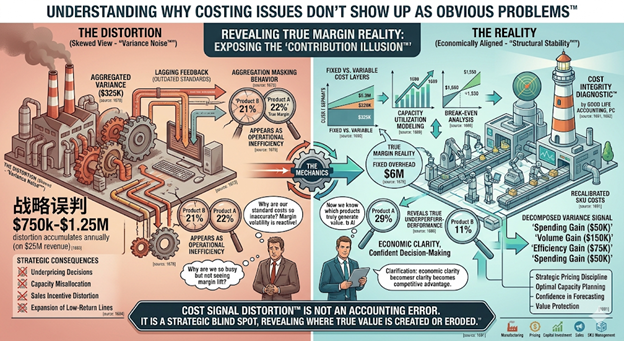
Most manufacturing leaders assume that if something is wrong with their costing system, it would be obvious. Margins would drop.Inventory would spike.Financial results would clearly signal a problem. But that’s not how costing issues behave. Costing issues rarely show up as obvious problems because they develop gradually, spread across multiple areas, and are often masked […]
Why Does Your Costing System Work in Theory—but Break in Practice?
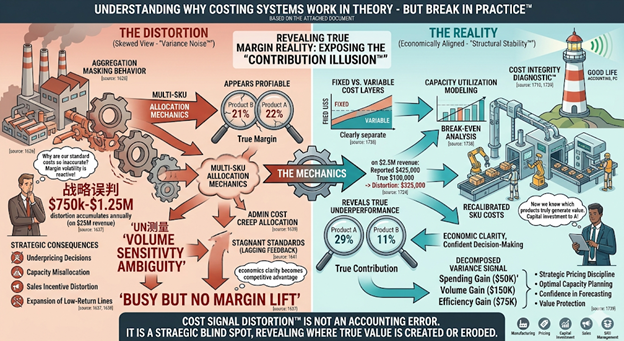
A costing system works in theory but fails in practice because it reflects assumptions—not actual operational behavior. Over time, production realities shift while cost structures remain static, creating hidden distortions in margins, inventory, and decision-making. What appears “accurate” in reports is often misaligned with how costs truly flow through the business. Costing Systems Are Built […]