
Can Bad Master Data Destroy an ERP Implementation?
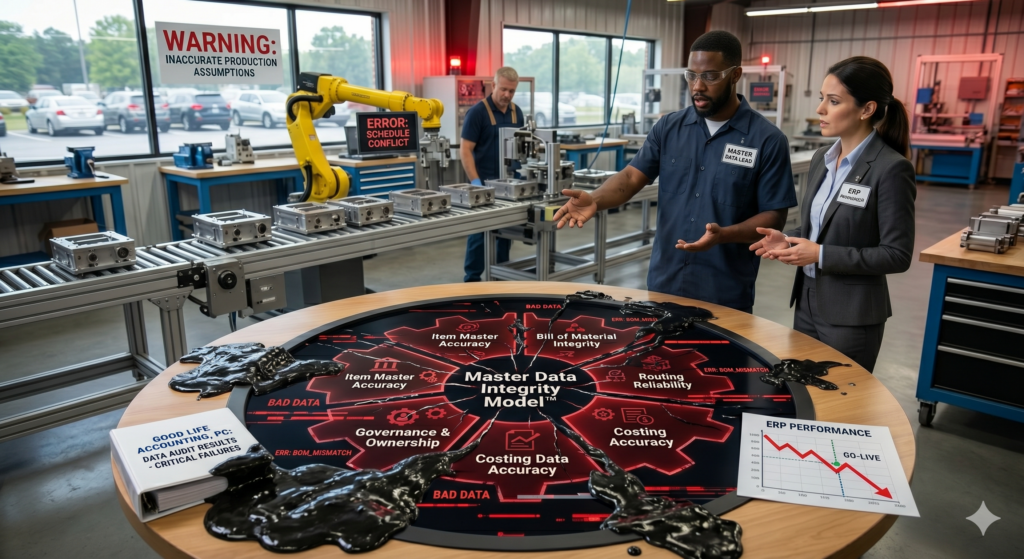
Direct Answer Yes. Bad master data can destroy an ERP implementation even when the software is configured correctly, users are properly trained, and the project is delivered on time. ERP systems depend on accurate item masters, bills of material, routings, work centers, vendor records, customer records, and costing structures. When that information is inaccurate, incomplete, […]
Can Cost Absorption Make a Manufacturing Company Look More Profitable Than It Really Is?

Direct Answer Yes. Cost absorption can temporarily improve reported gross margin, EBITDA, and net income even when demand is weakening and cash flow is deteriorating. This occurs because a portion of manufacturing costs is assigned to inventory rather than immediately recognized as expense. For commercial bankers, understanding the relationship between inventory growth and reported earnings […]
Why Do Variances Stop Being Useful (and What Does That Signal About Your Cost System?)
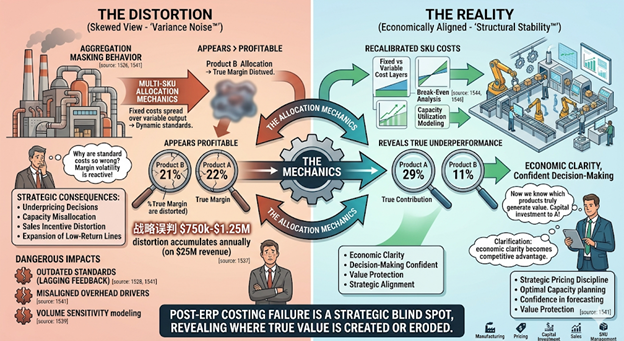
Variance analysis is supposed to be one of the most powerful tools in a manufacturing business. It highlights changes, surfaces issues, and drives corrective action. But in many companies, variances are still reported—yet no longer useful. Variances stop being useful when the underlying standards are no longer aligned with operational reality. When that happens, variances […]
What Is Structural Instability in Manufacturing Cost Systems?
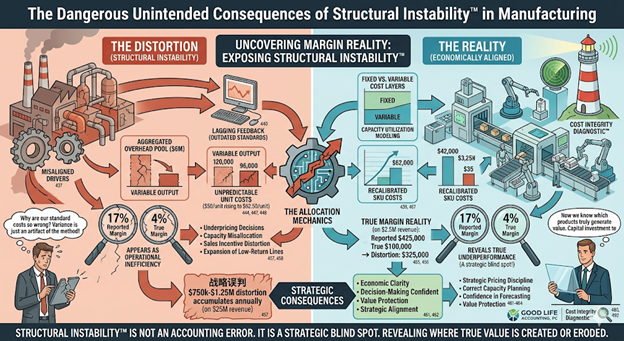
Every manufacturing company operates on an underlying cost structure that connects materials, labor, overhead, production flow, and volume behavior. This structure forms the foundation for pricing, margin analysis, and operational decision-making. Over time, however, businesses evolve while their cost systems often remain anchored to older assumptions. Structural instability occurs when a manufacturing cost system no […]
What Is Overhead Pool Inflation in Manufacturing Cost Systems?
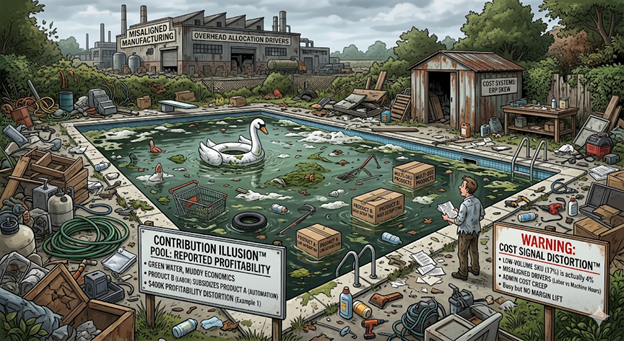
Manufacturing overhead rarely stays static as businesses grow. Facilities expand, supervisory layers increase, indirect labor rises, and technology investments accumulate. These costs are typically grouped into overhead pools and allocated across products using absorption drivers such as labor hours or machine time. Overhead Pool Inflation occurs when manufacturing overhead expands but the allocation logic used […]
Why Do Standard Costs Become Stagnant in Manufacturing Systems?
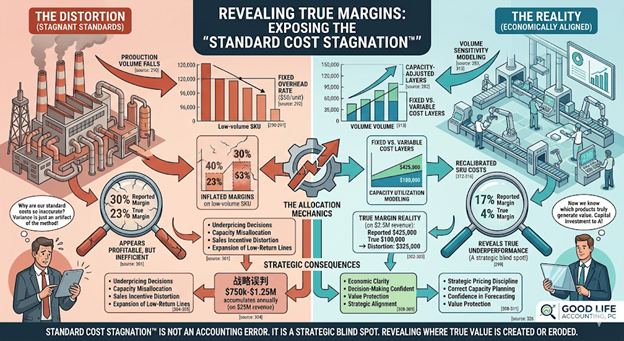
Standard costing is designed to create stability inside manufacturing financial reporting. It provides a consistent framework for measuring production efficiency, identifying variances, and evaluating profitability. However, production environments evolve continuously while standard costs are often refreshed infrequently. Standard Cost Stagnation occurs when standard costs are not updated in proportion to changes in materials, labor efficiency, […]
What Is Absorption Drift in Manufacturing Cost Systems?
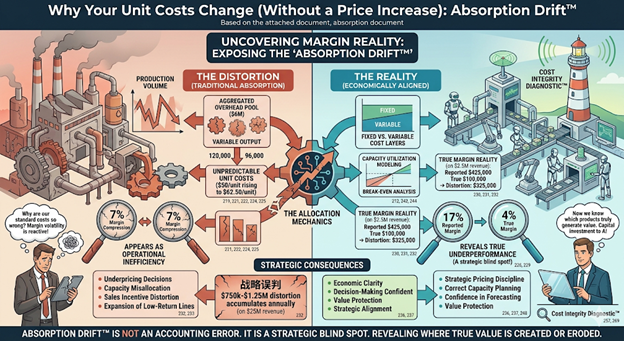
Manufacturers rely on absorption costing to allocate overhead across production. In theory, this creates consistent product costing and stable margins. In reality, production environments evolve while absorption assumptions often remain unchanged. Absorption drift occurs when the relationship between overhead allocation and actual production behavior becomes misaligned. As production volumes, labor mix, and automation levels change, […]