
For Commercial Bankers & Lenders Serving Manufacturers: What Are the Quiet Signs of Margin Drift That Commercial Bankers Often Miss?
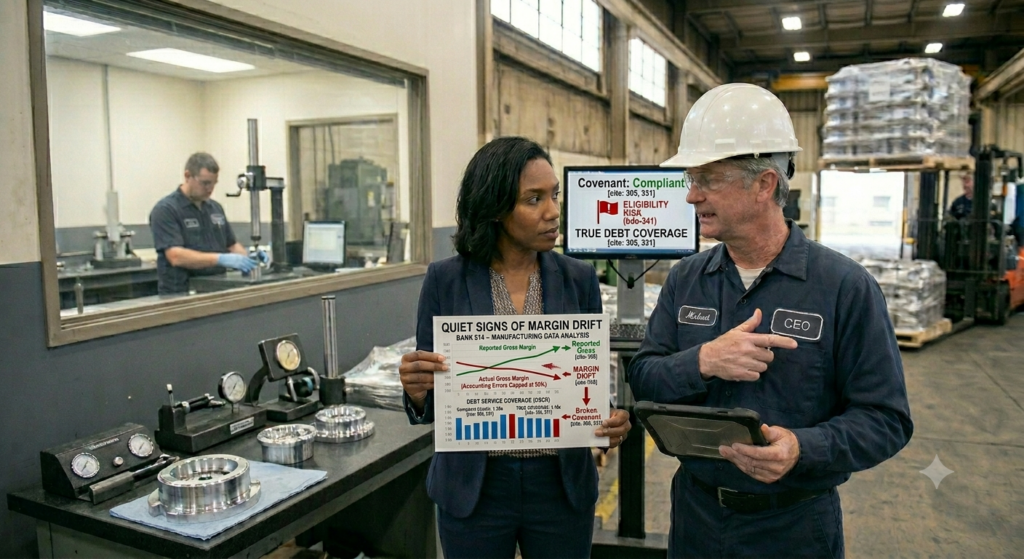
Direct Answer Margin drift occurs when reported gross margins gradually become disconnected from actual manufacturing economics. Unlike margin compression, which is usually visible in financial statements, margin drift often develops quietly through outdated standard costs, declining yields, increasing scrap, overhead growth, inventory inaccuracies, and changing production assumptions. For commercial bankers, margin drift is dangerous because […]
For Commercial Bankers & Lenders Serving Manufacturers: What Manufacturing Red Flags Should Commercial Bankers Never Ignore?

Direct Answer Most manufacturing credit problems begin long before a covenant violation, liquidity crisis, or borrowing base deficiency appears. The earliest warning signs are usually operational rather than financial. Inventory growth, declining inventory turns, recurring inventory adjustments, weakening cash conversion, outdated costing systems, deteriorating production metrics, and rising borrowing base utilization often signal emerging risk […]
If a Manufacturing Company Passed Its Audit, Can the Operational Data Still Be Wrong?
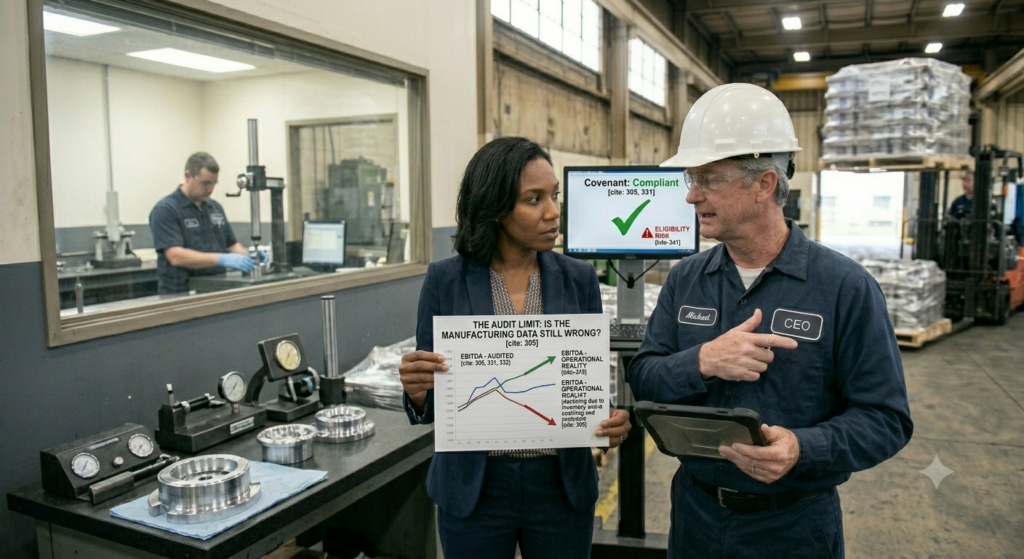
Direct Answer Yes. A manufacturing company can receive a clean audit opinion while still operating with inaccurate inventory records, outdated standard costs, declining production yields, inaccurate routings, or unreliable operational reporting. An audit provides assurance that financial statements are fairly presented in accordance with accounting standards. It does not necessarily validate every operational assumption used […]
How Do Manufacturing Costing Problems Become Covenant Problems?
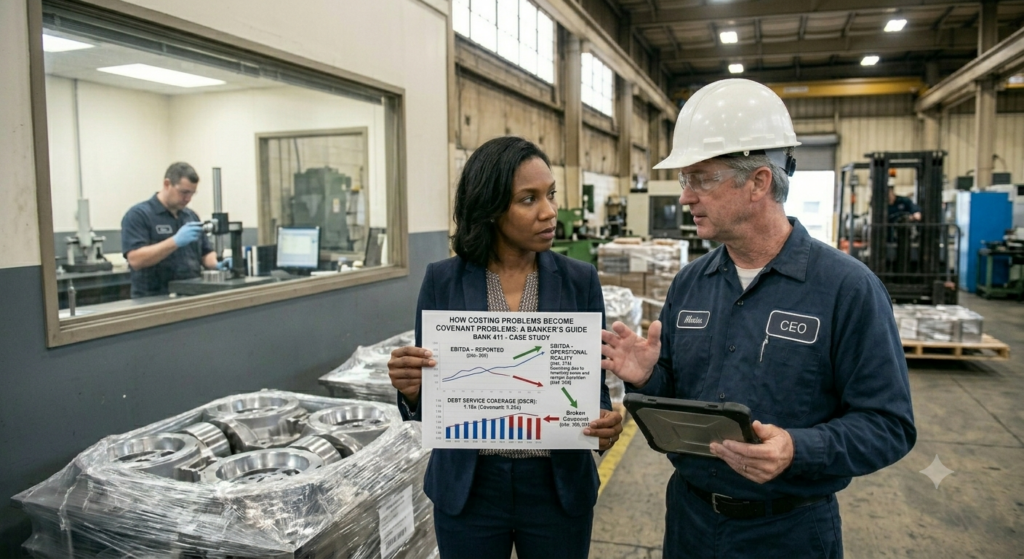
Direct Answer Manufacturing costing problems become covenant problems when inaccurate cost information flows through inventory valuation, gross margin, EBITDA, borrowing base calculations, and financial ratios. What begins as a small operational issue—such as outdated standard costs, inventory inaccuracies, declining yields, or improper overhead allocations—can gradually distort financial reporting. By the time a covenant violation occurs, […]
Can Commercial Bankers Trust Reported EBITDA in Manufacturing Companies?

Direct Answer Not always. EBITDA is one of the most important metrics used in commercial lending, but it should never be accepted without understanding the operational and accounting systems that produce it. In manufacturing companies, EBITDA can be influenced by inventory valuation methods, standard costing assumptions, production reporting accuracy, inventory growth, absorption accounting, and working […]
What Manufacturing Metrics Should Every Commercial Banker Understand?

Direct Answer Commercial bankers who lend to manufacturers should understand more than financial ratios. Inventory turns, yield, scrap rates, work-in-process inventory, schedule attainment, capacity utilization, labor efficiency, production variances, and equipment effectiveness often reveal emerging credit risks months before those risks appear in financial statements. While financial statements explain what happened, manufacturing metrics often indicate […]
What Working Capital Warning Signs Are Hidden in Manufacturing Production Data?

Direct Answer Many manufacturing working capital problems become visible in production data months before they appear in financial statements. Declining inventory turns, increasing work-in-process inventory, longer production cycle times, worsening yields, and declining schedule attainment often signal future liquidity pressure before lenders see changes in EBITDA, borrowing base utilization, or covenant compliance. For commercial bankers, […]
Why Can EBITDA Improve While Cash Flow Gets Worse in Manufacturing?

Direct Answer Yes, EBITDA can improve while cash flow deteriorates in manufacturing companies. This typically occurs when inventory, accounts receivable, or working capital requirements grow faster than cash generation. In these situations, reported profitability may improve while liquidity weakens. For commercial bankers, this distinction is critical because loans are repaid with cash flow, not EBITDA. […]
Do Small Inventory Adjustments Signal Bigger Problems for Manufacturing Lenders?

Direct Answer Yes. Small inventory adjustments often reveal larger operational, reporting, and collateral risks that may not yet be visible in financial statements. While a single inventory correction is usually not a concern, recurring inventory adjustments frequently indicate weaknesses in inventory controls, production reporting, transaction discipline, or inventory accuracy. For commercial bankers, the adjustment amount […]
Why Is Inventory Accuracy a Bigger Risk Than Most Commercial Lenders Realize?

Direct Answer Inventory accuracy is often a greater risk than inventory valuation because inaccurate inventory records can undermine borrowing base calculations, collateral coverage, gross margin reporting, and financial statement reliability long before inventory becomes obsolete or impaired. For commercial bankers, inventory problems typically begin as information problems, not valuation problems. When inventory records stop accurately […]