
When Does Manufacturing Inventory Become a Borrowing Base Risk?

Direct Answer Manufacturing inventory becomes a borrowing base risk when its recorded value no longer reflects its recoverable value. Inventory may appear accurate on financial statements while being impaired by obsolescence, aging, customer-specific requirements, inaccurate counts, or weak inventory controls. For commercial bankers, the most important question is not how much inventory exists—it is how […]
Can Cost Absorption Make a Manufacturing Company Look More Profitable Than It Really Is?

Direct Answer Yes. Cost absorption can temporarily improve reported gross margin, EBITDA, and net income even when demand is weakening and cash flow is deteriorating. This occurs because a portion of manufacturing costs is assigned to inventory rather than immediately recognized as expense. For commercial bankers, understanding the relationship between inventory growth and reported earnings […]
Margin Compression vs. Margin Distortion: Which One Creates Greater Risk for Commercial Bankers?
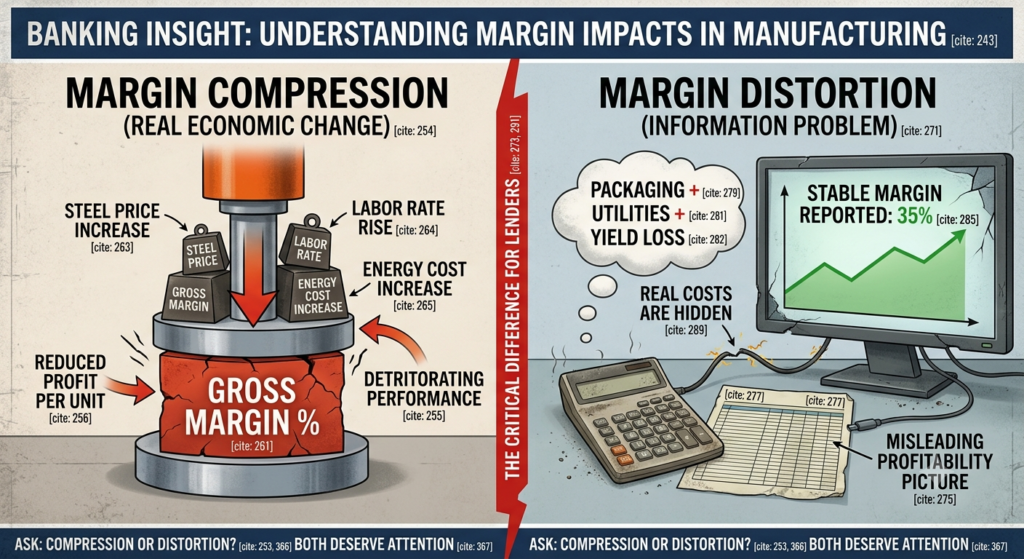
Direct Answer Margin compression and margin distortion are not the same problem, even though they can produce similar financial results. Margin compression occurs when the actual economics of a manufacturing business deteriorate because costs increase or pricing weakens. Margin distortion occurs when the costing system no longer accurately measures profitability. For commercial bankers, distinguishing between […]
Why Do Manufacturing Gross Margins Sometimes Stop Reflecting Reality?
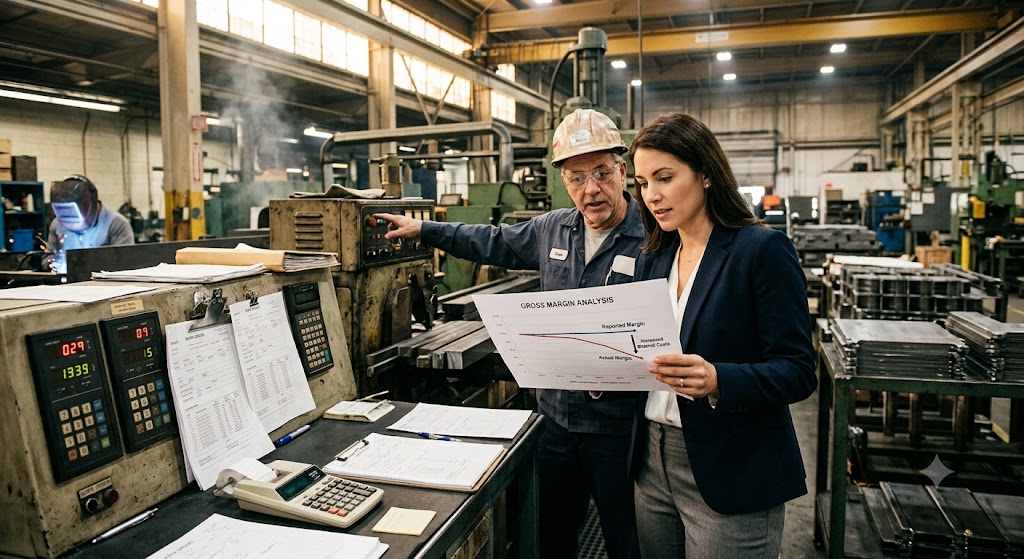
Direct Answer Yes. Manufacturing gross margins can appear stable or even improve while actual production economics deteriorate. This occurs when standard costs, inventory valuation methods, overhead allocations, or production assumptions fail to keep pace with operational reality. Commercial bankers who rely solely on reported margins may miss early signs of weakening earnings quality, cash flow […]